
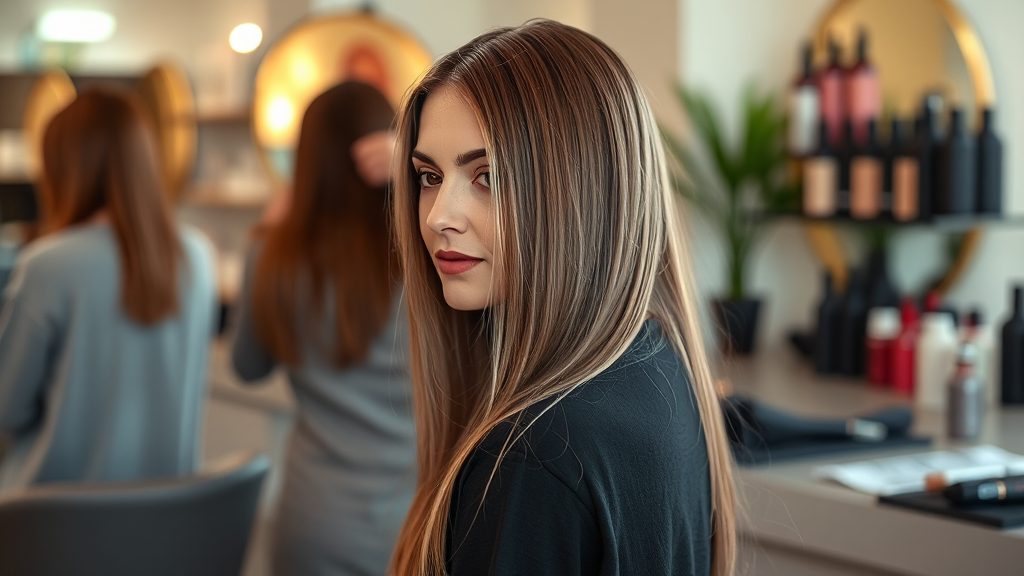
1C Hair Type: Your Complete Guide to This Straight, Fine Texture
If you have ever wondered why your hair falls completely flat no matter how much volume spray you use, you may belong to the 1c hair type club. This specific hair texture sits right at the intersection of straight and slightly wavy, and it comes with its own set of styling quirks, care requirements, and product needs. Understanding your hair type is the first step toward working with your natural texture rather than fighting against it every morning.
The 1C hair type is part of the Type 1 family, which covers all straight hair. But within that family, there are three distinct subcategories: 1A, 1B, and 1C. While 1A is baby-fine and almost glass-like, and 1B has slightly more body, 1C is the thickest and most textured of the straight hair types. It has a subtle bend that gives it a bit more personality than its straighter cousins, and it often holds a curl slightly better than other Type 1 textures.
In this guide, we will break down everything you need to know about 1C hair: how to identify it, how to care for it, which products work best, and how to style it for different occasions. Whether you are a lifelong 1C or just now discovering your true texture, this article will give you the tools to make your hair look its absolute best.
What Exactly Is 1C Hair Type?
The 1C hair type is characterized by hair that is mostly straight but has a noticeable bend or slight wave, especially toward the ends. It is the thickest and coarsest of the straight hair categories, and individual strands tend to be more substantial than those found in 1A or 1B hair. This added thickness means 1C hair can carry more weight, which is why it often looks fuller and holds styles longer than finer straight textures.</n
Unlike 1A hair, which lies completely flat against the scalp, 1C hair has a bit of natural lift at the roots and a gentle curve that becomes more apparent as the hair grows longer. It is not quite wavy enough to be classified as Type 2, but it is not perfectly straight either. This in-between nature is exactly what makes 1C hair so versatile and, at the same time, sometimes tricky to manage.
People with 1C hair often notice that their hair looks straight when it is short but develops a subtle flip or bend once it reaches shoulder length. Humidity can also bring out that gentle wave, which is why many 1C individuals find their hair behaves differently depending on the weather.
How to Tell If You Have 1C Hair
Identifying your hair type is not always as straightforward as it sounds, especially when you have been styling your hair the same way for years. Here are a few signs that you might have 1C hair:
- Your hair is mostly straight but has a slight bend. When you let your hair air-dry without touching it, does it fall straight with a gentle curve near the ends? That is a classic 1C trait.
- Your strands are thicker than average. If you can feel individual strands between your fingers and they seem substantial rather than silky-fine, you likely have 1C hair.
- Your hair holds a curl better than expected. While straight hair types generally struggle to hold curls, 1C hair can often maintain a blowout or curling iron style for several hours.
- Your roots have natural volume. Unlike 1A hair, which tends to lie flat, 1C hair has a bit of natural lift at the crown.
- Your hair gets frizzy in humidity. The slight wave in 1C hair means it is more prone to frizz than perfectly straight hair.
If several of these descriptions sound familiar, you are likely working with 1C hair. A professional hair type quiz can also help confirm your texture and point you toward the right products and styling techniques.
Care Tips for 1C Hair Type
Caring for 1C hair requires a balanced approach. You want to maintain the natural body and slight wave without weighing the hair down or causing excess frizz. Here are some practical care tips:
Washing and Conditioning
1C hair can become oily at the roots while the ends remain dry, so it is important to choose a shampoo that cleanses effectively without stripping natural oils. Look for lightweight formulas that are labeled for normal to oily hair. Conditioner should be applied mainly to the mid-lengths and ends, avoiding the scalp to prevent greasiness.
Washing every other day is usually sufficient for 1C hair. Over-washing can strip the hair of its natural oils and lead to dryness, while under-washing can cause buildup that makes the hair look flat and lifeless.
Drying Techniques
How you dry your 1C hair makes a big difference in how it looks. If you want a smooth, straight finish, use a blow dryer with a round brush and direct the air downward along the hair shaft. If you prefer to enhance the natural bend, let your hair air-dry and scrunch the ends gently with your hands.
Avoid rubbing your hair vigorously with a towel, as this can cause frizz and breakage. Instead, gently squeeze excess water out with a microfiber towel or an old cotton t-shirt.
Heat Styling
1C hair can withstand heat styling relatively well, but it is still important to use a heat protectant spray before applying any hot tools. Flat irons, curling wands, and blow dryers can all be used on 1C hair, but moderation is key. Excessive heat can damage the hair over time, leading to split ends and dullness.
When using a flat iron, work in small sections and avoid holding the iron on one spot for too long. For curls, use a medium-barrel curling wand and wrap the hair away from your face for a natural look.
Best Products for 1C Hair
Choosing the right products can transform the way your 1C hair looks and feels. Here are some product categories to focus on:
- Volumizing shampoo and conditioner: These formulas add body without weighing hair down, which is ideal for 1C hair.
- Lightweight leave-in conditioner: A leave-in conditioner or detangler helps smooth the hair and reduce frizz without making it greasy.
- Sea salt spray: If you want to enhance the natural wave in your 1C hair, a sea salt spray can add texture and definition.
- Heat protectant: Always use a heat protectant before blow-drying or using hot tools.
- Dry shampoo: Dry shampoo is a lifesaver for refreshing roots between washes and adding a bit of volume.
It is also worth investing in a good quality brush. A paddle brush works well for smoothing 1C hair, while a round brush is ideal for blowouts. Boar bristle brushes can help distribute natural oils from the scalp to the ends, keeping the hair healthy and shiny.
Styling Ideas for 1C Hair Type
One of the best things about 1C hair is its versatility. It can be worn sleek and straight, styled into soft waves, or pulled up into an elegant updo. Here are some styling ideas to try:
Sleek and Straight
For a polished, professional look, blow-dry your 1C hair straight using a round brush and finish with a flat iron. Apply a small amount of smoothing serum to the ends to eliminate flyaways. This style works well for office days, meetings, or any occasion where you want to look put-together.
Soft, Beachy Waves
To bring out the natural bend in your 1C hair, spritz on some sea salt spray while your hair is damp and scrunch the ends with your hands. Let it air-dry, then use a curling wand on a few random sections to add extra texture. This effortless look is perfect for weekends and casual outings.
Voluminous Blowout
1C hair can achieve a gorgeous, voluminous blowout with the right technique. Use a round brush and blow dryer to lift the roots and create movement throughout the hair. Finish with a light-hold hairspray to keep the volume in place. This style is ideal for special events or when you want to make a statement.
Elegant Updo
Because 1C hair has a bit of natural texture, it holds updos well. Try a low bun with a few loose strands framing your face, or a classic French twist. Use bobby pins and a bit of hairspray to secure the style, and pull out a few tendrils for a soft, romantic look.
Common Challenges and How to Overcome Them
Like any hair type, 1C hair comes with its own set of challenges. Here are some common issues and how to address them:
Frizz in Humid Weather
Humidity can cause 1C hair to frizz, especially if it has a slight wave. To combat this, use a frizz-fighting serum or leave-in conditioner before styling. Avoid touching your hair throughout the day, as this can make frizz worse.
Lack of Volume at the Roots
While 1C hair has more natural volume than 1A or 1B, it can still fall flat at the roots over time. Use a volumizing mousse or root-lifting spray when styling, and try blow-drying your hair upside down to add lift.
Oily Scalp with Dry Ends
This is a common issue for 1C hair. To balance oiliness at the scalp and dryness at the ends, use a clarifying shampoo once a week and apply a deep conditioning mask to the ends. Avoid applying conditioner to the roots.
Holding a Curl
Although 1C hair holds curls better than other straight types, it can still struggle to maintain them all day. To make curls last longer, use a curling iron with a smaller barrel, set the curls with hairspray, and avoid touching them until they have cooled completely.
How 1C Hair Compares to Other Hair Types
Understanding how 1C hair differs from other types can help you make better styling and care decisions. Here is a quick comparison:
- 1A: Very fine, very straight, and often lacks volume. 1C hair is thicker and has more natural body.
- 1B: Straight with slightly more volume than 1A, but still lacks the bend and thickness of 1C.
- 2A: Wavy hair with a loose S-shape pattern. 1C hair is straighter and has a more subtle bend.
- 2B: More defined waves that start closer to the roots. 1C hair is mostly straight with only a slight wave at the ends.
Knowing where your hair falls on the spectrum can help you choose the right products and techniques. If you are unsure, consider taking a professional hair type quiz to get a precise classification.
Frequently Asked Questions About 1C Hair Type
Is 1C hair considered straight or wavy?
1C hair is classified as straight hair, but it has a slight bend or wave that distinguishes it from 1A and 1B. It is the most textured of the straight hair types, often described as straight with a subtle curve.
Can 1C hair hold curls?
Yes, 1C hair holds curls better than other straight hair types because of its thicker strands and slight natural bend. However, curls may still loosen throughout the day, so using a strong-hold hairspray and setting the curls properly can help them last longer.
How often should I wash 1C hair?
Most people with 1C hair can wash every other day or every two days. If your scalp gets oily quickly, you may need to wash more often, but be sure to use a gentle shampoo to avoid stripping natural oils.
What is the best haircut for 1C hair?
Layered cuts work well for 1C hair because they add movement and prevent the hair from looking flat. A blunt cut can also look sleek and sophisticated, but it may weigh down the hair if it is very long. Consult with a stylist to find the best cut for your face shape and lifestyle.
Does 1C hair get frizzy?
Yes, 1C hair can get frizzy, especially in humid conditions. Using anti-frizz products and avoiding excessive touching can help keep frizz under control.
Final Thoughts on 1C Hair Type
The 1C hair type is a beautiful and versatile texture that offers the best of both worlds: the sleekness of straight hair with a touch of natural movement. By understanding your hair’s unique characteristics and choosing the right products and styling techniques, you can enhance its natural beauty and enjoy healthy, manageable hair every day.
Whether you are embracing your natural bend or experimenting with new styles, remember that the key to great hair is treating it with care and using products that suit your specific texture. With the right approach, your 1C hair can look effortlessly elegant and full of life.